


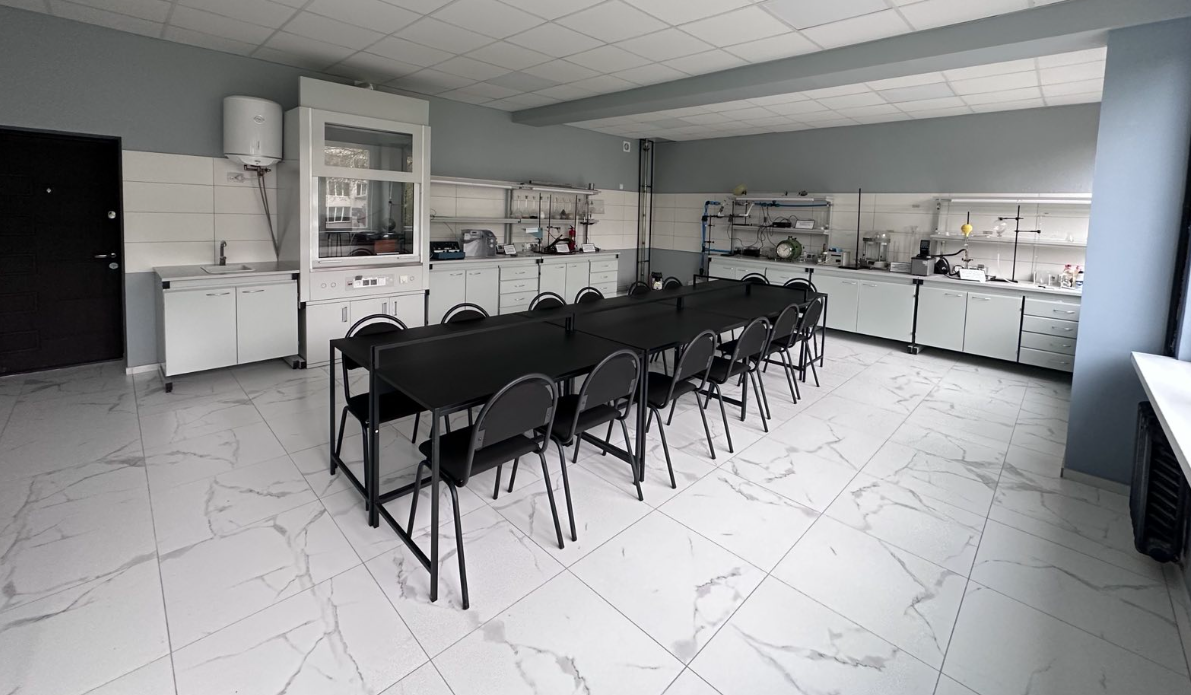
The Educational Laboratory of Gas and Condensate Extraction named after I. I. Kravchenko operates within the Department of Oil and Gas Fields Development and Exploitation at Ivano-Frankivsk National Technical University of Oil and Gas. The laboratory is located in room 0220 of the university, with a total area of 54 m², and serves as the main practical space for training specialists in the development and exploitation of gas and gas condensate fields.
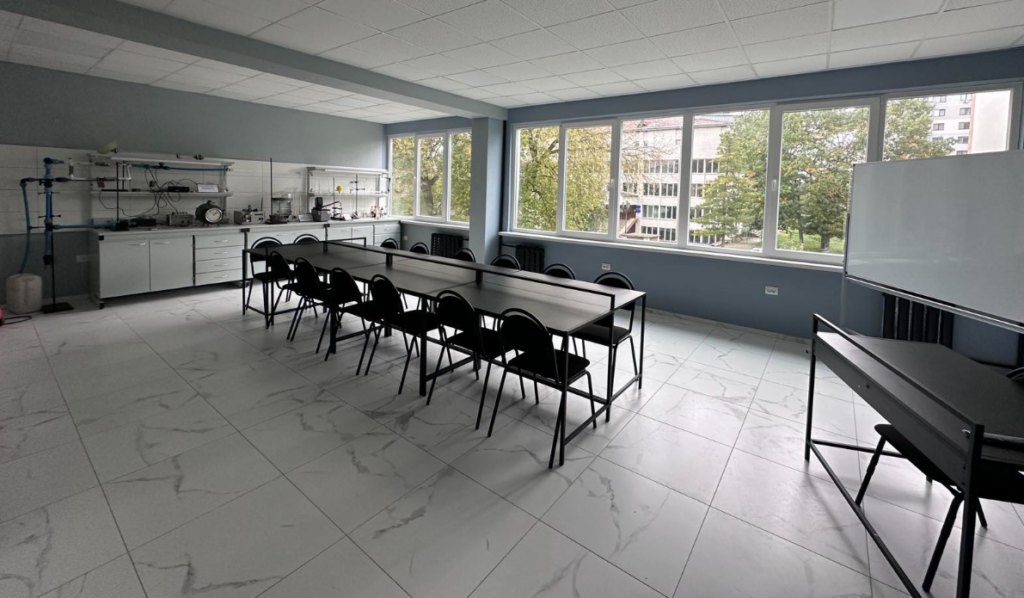
Named in honor of the eminent scholar and practitioner of the oil and gas industry I. I. Kravchenko, the laboratory maintains the traditions of the university’s scientific school while remaining a relevant educational environment where students master methods for researching natural gases and condensates, directly applicable in industrial practice.
Laboratory Equipment
Installation for determining the density of natural hydrocarbon gases allows determining one of the basic physical parameters of reservoir or industrial gas. Density is a fundamental value for thermodynamic calculations, design of gas collection and transportation systems, as well as for assessing its thermal characteristics.
Installation for determining the fractional composition of stable hydrocarbon condensate designed for analyzing the distribution of hydrocarbon fractions in condensate by boiling points. The fractional composition determines the commercial properties of the condensate, its processing potential, and the selection of the technological scheme for industrial preparation.
Installation for Determining the Dew Point of Natural and Associated Gases for Hydrocarbons and Moisture Using the Gas Conditioning Indicator “Kharkiv 1M” allows for controlling one of the most important indicators of gas quality. The dew point for moisture and hydrocarbons determines the conditions under which liquid plugs or hydrates may form in the pipeline, which is one of the main causes of disruptions in gas transportation systems.
Devices for determining the content of hydrogen sulfide and mercaptans in natural gas ensure the control of corrosion-aggressive and toxic gas components. The content of H₂S and mercaptans is regulated by commercial gas quality standards and is a critical parameter for both personnel safety and the protection of pipeline infrastructure from corrosion.
Installation for Determining Gas Displacement Efficiency by Water from a Porous Medium models one of the key processes occurring in the gas reservoir at the final stage of development. The advancement of formation waters displaces gas from the pore space of the reservoir, and the study of this process allows for the substantiation of methods to enhance reservoir gas recovery.
Installation for determining the foaming properties of surfactant solutions (SAS) is applied for selecting chemical reagents used in removing fluid from the bottom of gas wells. Accumulation of fluid at the bottom is one of the reasons for decreased well performance at the later stages of their operation, and surfactants are an effective tool to combat this phenomenon.
Educational Process
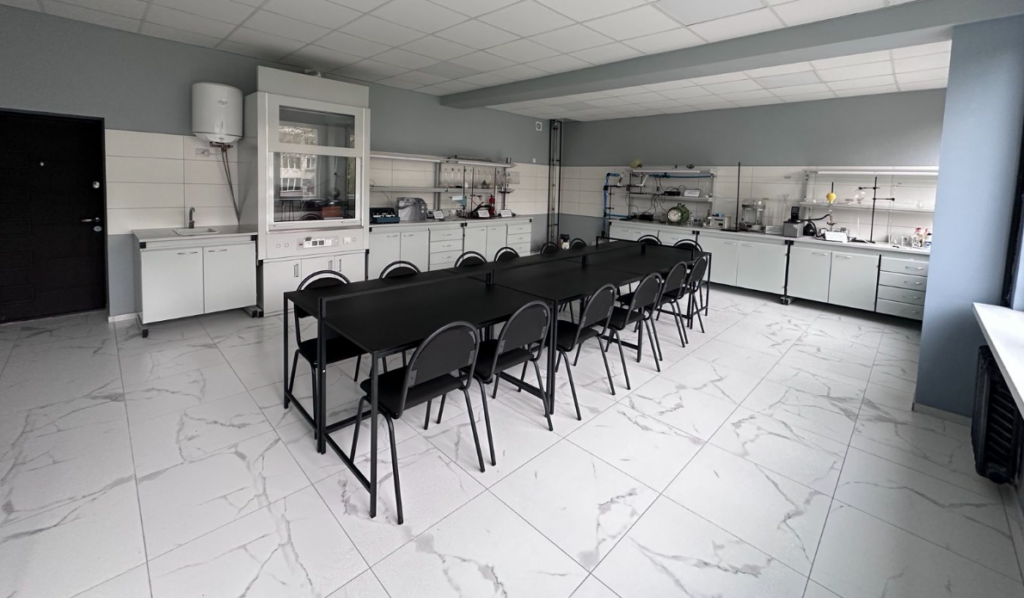
Practical classes are conducted in the laboratory for the courses “Development and Operation of Gas and Gas Condensate Fields” and “Gas Production Technology.” Students perform laboratory work to study the physico-chemical properties of natural gases and condensates, learn methods for gas quality control, and comprehend the processes occurring in the reservoir and at industrial sites. The skills acquired are directly applicable in working at gas and gas condensate fields in Ukraine and abroad.