


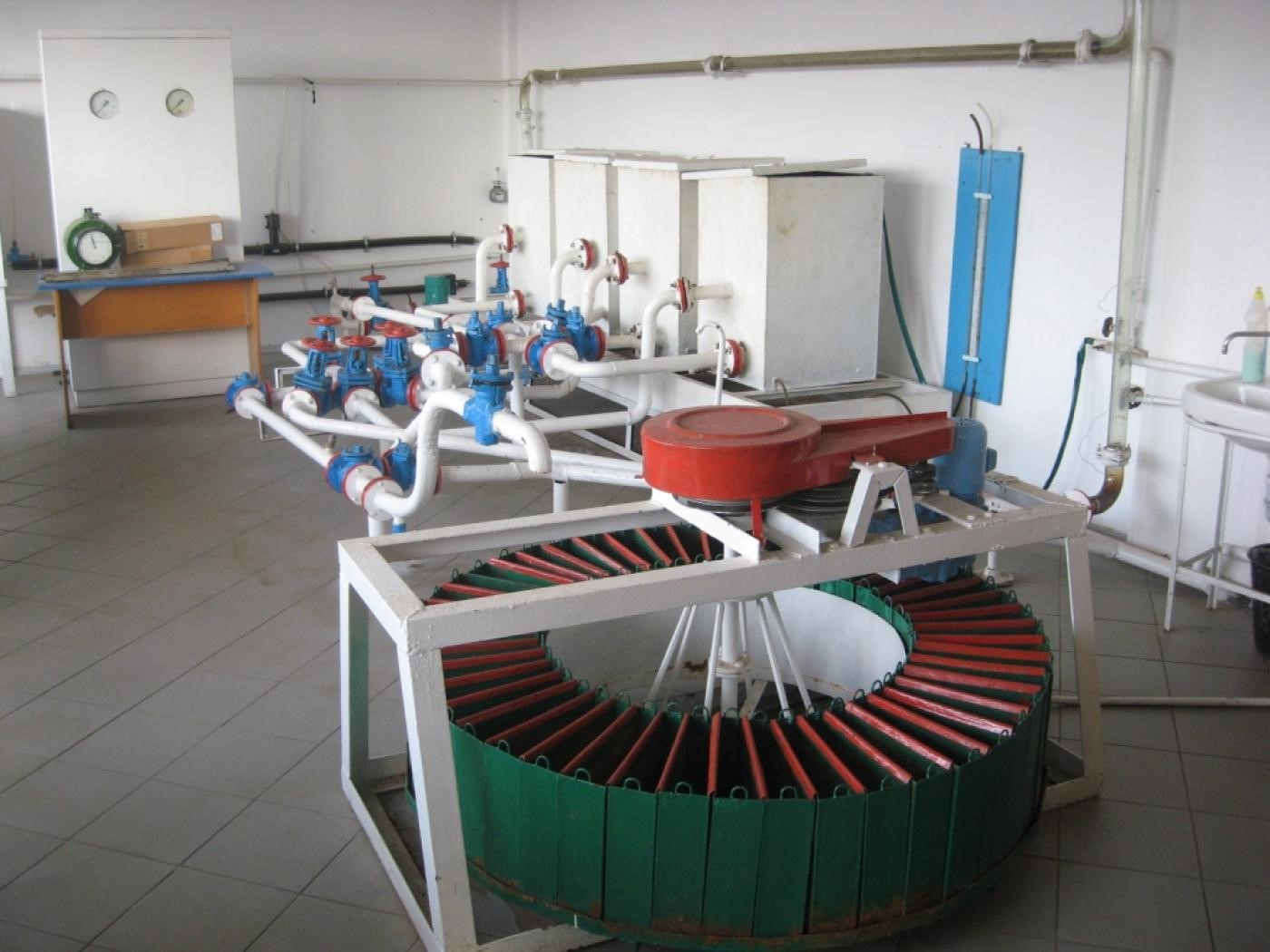
The educational and research laboratory of oil and oil products pipeline transportation operates based on the Department of Transportation and Storage of Energy Resources at the Ivano-Frankivsk National Technical University of Oil and Gas. The laboratory is a specialized practical platform where students study the physical and rheological properties of liquid hydrocarbons and master the principles of operation of main pipeline systems using physical models.
Research Areas
- Research on the physical properties of liquids — density, viscosity, freezing temperature, and other parameters that determine the transportation regime of oil and petroleum products.
- Study of rheological characteristics of Newtonian and non-Newtonian fluids, construction of flow curves, and determination of rheological models for different types of oils.
- Modeling the process of oil transportation through a main pipeline considering the operation of pumping stations, loopings, and inserts.
- Modeling of sequential pumping of different types of petroleum products, investigation of the mixing zone, and determination of its properties for making decisions about product batch acceptance.
Laboratory Equipment
Set of hydrometers and capillary viscometers is a basic toolkit for determining the density and kinematic viscosity of oil and oil products. The capillary method provides accurate measurement of the viscosity of Newtonian fluids and is a quality control standard for oil products at acceptance-delivery points.
Rotational viscometer Rheotest-2 designed for the study of rheological properties of fluids over a wide range of shear rates. Unlike capillary methods, rotational viscometry allows the investigation of non-Newtonian fluids—heavy and paraffinic oils with complex viscosity dependence on shear rate. Results are processed according to the Bingham, power-law, or Herschel–Bulkley rheological models.
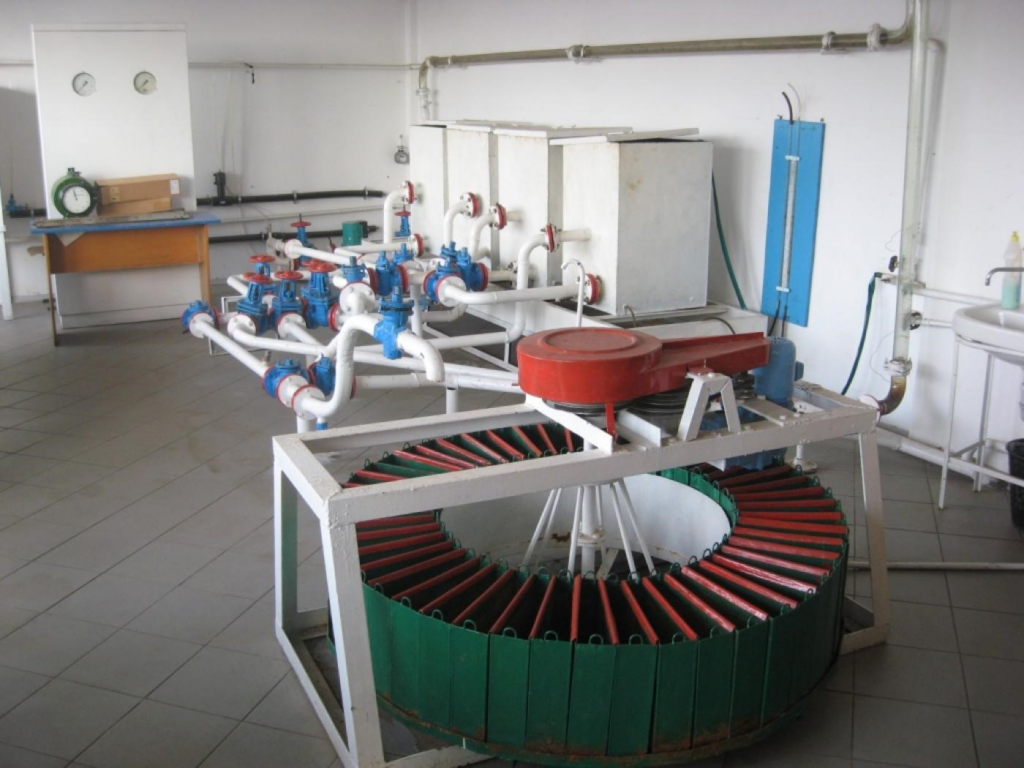
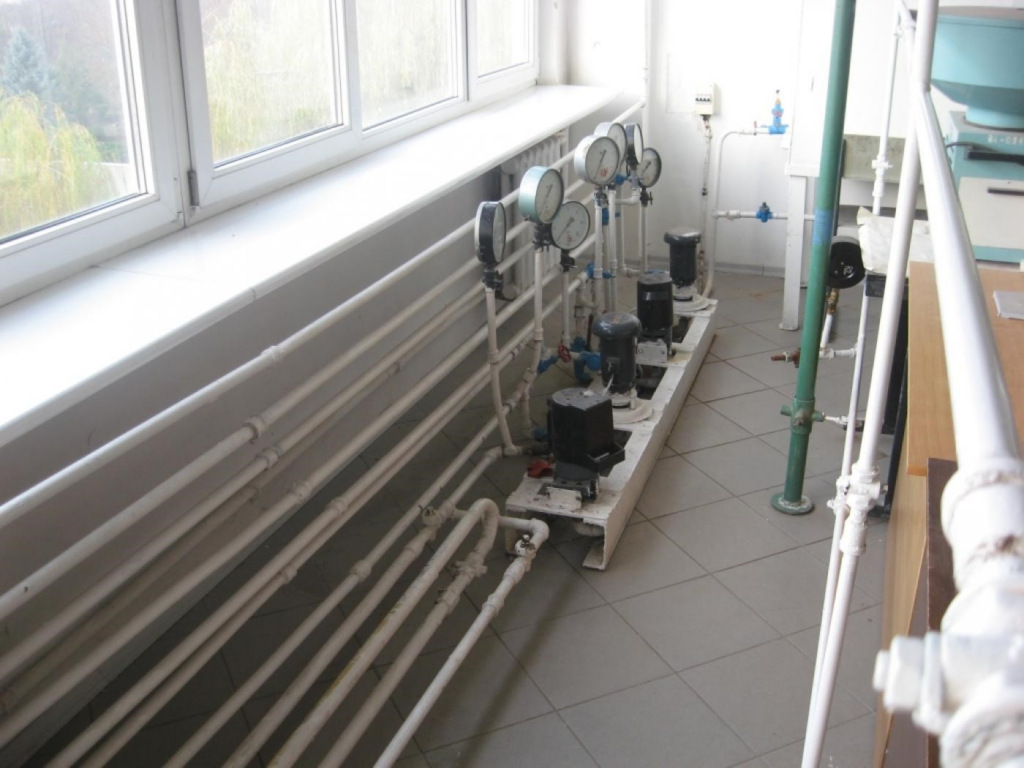
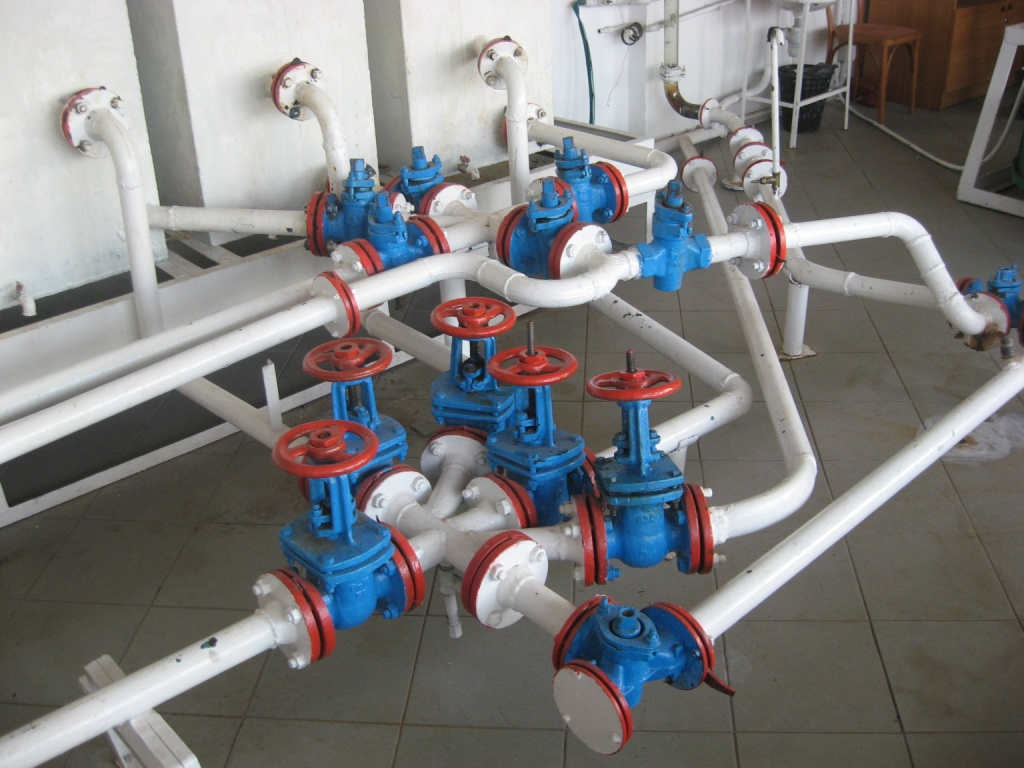
Main oil pipeline model — a physical setup that replicates the structure of a real pipeline system with multiple pump stations, loops, and inserts. Students study the hydraulic calculation of the pipeline, analyze the impact of parallel and series connection of pumps on the pumping mode, and investigate the system’s operation with changes in flow rate and fluid viscosity.
Model of the Main Oil Product Pipeline allows modeling the sequential pumping of various petroleum products in a single pipeline — a technology widely used in real systems to save capital expenses. Students investigate the formation of a mixing zone between batches of different products, study methods for its detection, and the acceptance of the mixture.
Educational Process
Practical classes on specialized disciplines of the Department of Transportation and Storage of Energy Resources are conducted in the laboratory. Working with rheological instruments and physical pipeline models helps students develop a systematic understanding of the processes involved in hydrocarbon transportation—from product properties to the hydraulics of the entire system. The practical skills acquired are directly in demand at enterprises of the “Ukrtransnafta” system and other pipeline transport operators.